Accumulator Bet Configurations in Football Markets and Their Influence on Payout Percentages
Written by Ellis Powell · Jun 26, 2026
Accumulator Bet Configurations in Football Markets and Their Influence on Payout Percentages
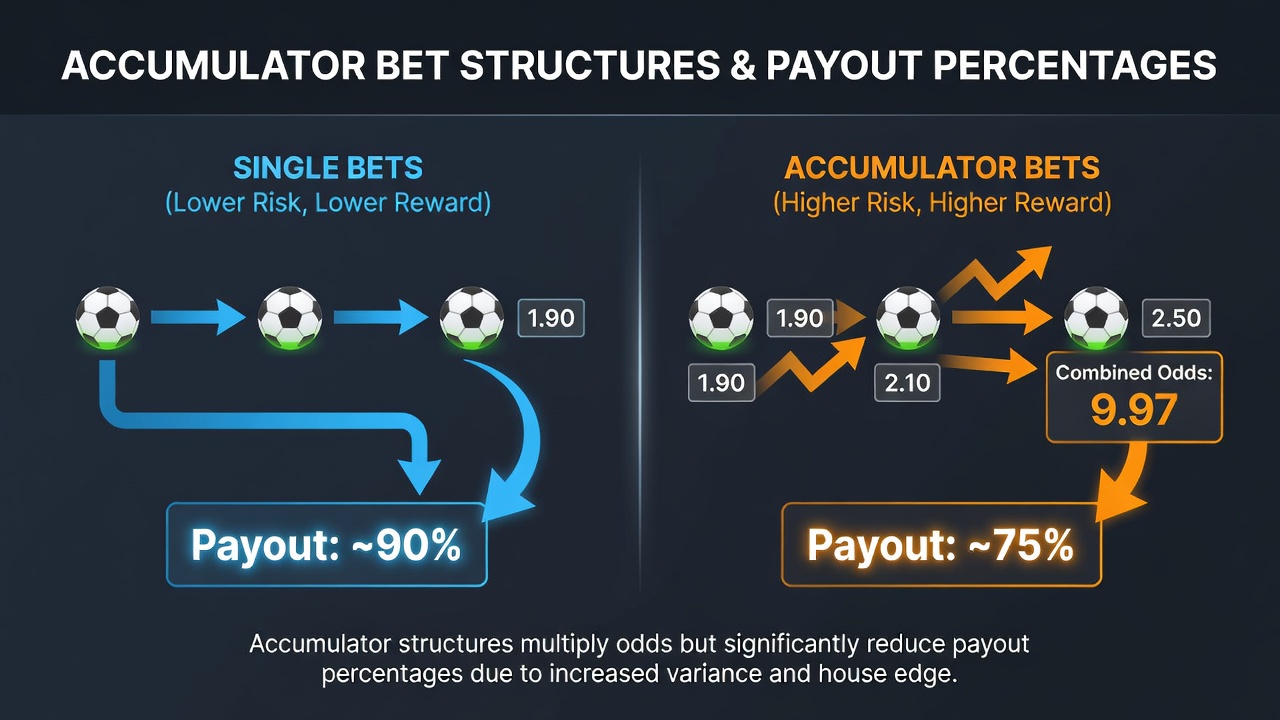
Accumulator bets in football wagering combine multiple selections into a single wager where each outcome must succeed for the bet to pay out and the odds multiply across every leg. This structure appeals to bettors seeking larger returns from modest stakes yet it alters the overall payout percentage in measurable ways because each additional selection incorporates the bookmaker's margin. Data from sports betting operators shows that as the number of legs increases the effective return to player declines since margins compound rather than add linearly.
Operators structure accumulators in standard formats including doubles trebles four-folds and larger combinations while some markets offer variants with insurance or cash-out features. Each format multiplies the decimal odds of individual matches and the final payout reflects the product minus the stake. Observers note that a typical three-leg accumulator on major European leagues carries combined odds between 4.00 and 8.00 yet the probability implied by those odds exceeds the true statistical likelihood once margins are factored in.
Mechanics of Odds Multiplication and Margin Compounding
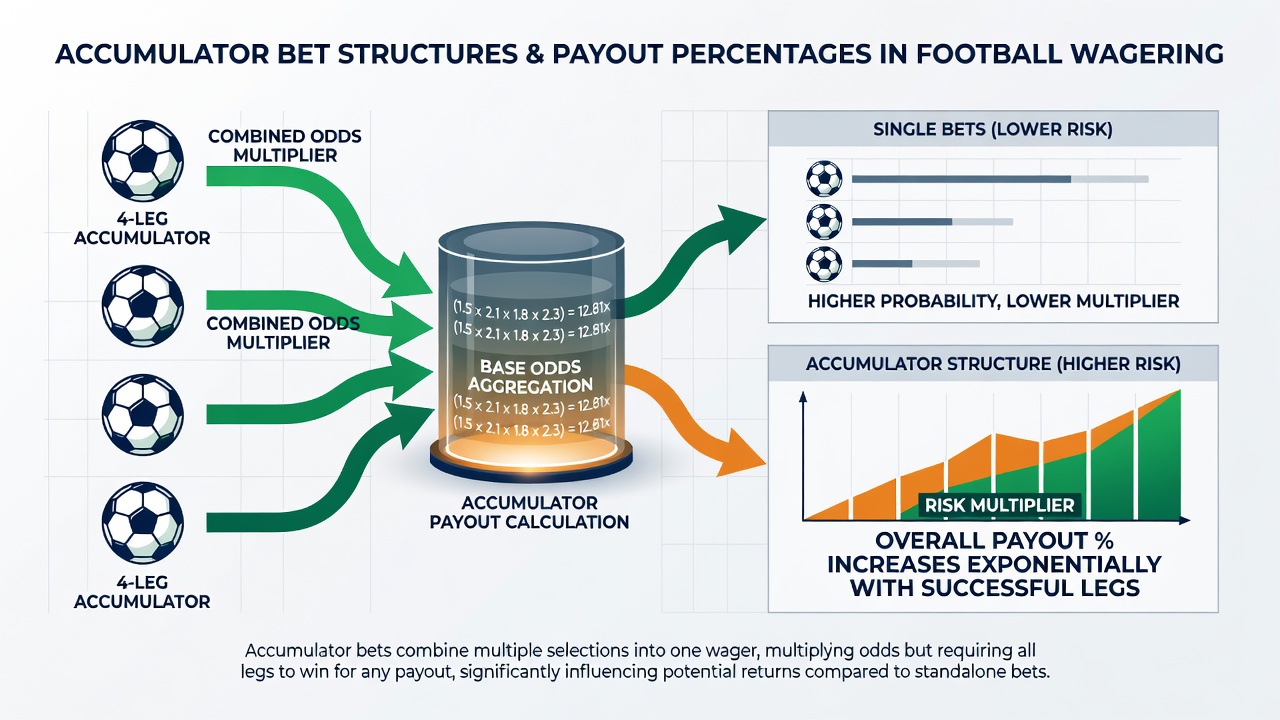
Bookmakers embed a margin into every individual football selection usually ranging from four to six percent depending on the competition and liquidity. When those selections combine in an accumulator the margins multiply rather than remain separate. A four-leg bet where each leg carries a 95 percent payout percentage produces an overall theoretical return of approximately 81 percent because 0.95 raised to the fourth power equals that figure. Researchers tracking betting data across multiple operators confirm this compounding effect remains consistent across both pre-match and live markets.
Football markets such as match result over-under goals and both-teams-to-score display different margin profiles with over-under selections often carrying slightly lower edges in high-profile fixtures. Accumulator builders who mix these market types therefore encounter varying rates of payout erosion. Figures released by the New Jersey Division of Gaming Enforcement indicate that accumulator volume in regulated U.S. sportsbooks grew steadily through the first half of 2026 with four-leg and five-leg tickets accounting for the largest share of handle.
Structural Variations Across Different Accumulator Types
Standard accumulators require every leg to win while system bets such as patents or lucky 15s cover multiple combinations within one ticket. These system structures distribute risk across several smaller accumulators and therefore preserve a higher collective payout percentage than a single large combination. Bettors who place a lucky 15 on four football selections receive returns even if only three legs succeed although the total payout percentage still falls below that of individual straight bets.
Some operators introduce correlated accumulators where selections share statistical relationships such as both teams to score combined with over 2.5 goals. Correlation can improve true probability yet bookmakers adjust odds to maintain margin integrity. Studies from the University of Sydney's gambling research unit demonstrate that bettors rarely exploit these correlations enough to offset the structural payout reduction inherent in multi-leg wagers.
Observed Payout Percentages in June 2026 Markets
By June 2026 regulated markets in several jurisdictions reported average accumulator payout percentages between 72 and 78 percent for four-fold tickets on top European leagues. This range reflects the combined effect of individual margins plus adjustments operators apply during major tournaments. Data compiled by the European Gaming and Betting Association reveals that accumulator payout percentages remained stable year-over-year despite increased competition among operators.
Live betting accumulators built during matches show slightly different dynamics because odds fluctuate rapidly and margins can tighten or widen depending on in-game events. Operators limit the number of legs available in live accumulators to manage risk and this restriction indirectly supports higher payout percentages than equivalent pre-match combinations. Bettors who monitor these constraints often shift toward shorter accumulators to maintain more favorable return rates.
Factors That Modify Accumulator Payout Impact
Competition liquidity and fixture timing influence how much margin each leg carries. High-profile matches in the English Premier League or UEFA Champions League typically feature tighter margins than lower-division games. Accumulators that include selections from disparate leagues therefore aggregate a wider range of margins and produce more pronounced payout percentage reductions. Operators adjust these margins dynamically in response to betting volumes and injury news.
Promotional offers such as enhanced odds or free bets on accumulators temporarily improve the headline payout percentage yet the underlying structure remains unchanged once the promotion ends. Industry reports indicate that players who regularly use such offers still experience the same long-term payout erosion when measured across hundreds of accumulator tickets.
Conclusion
Accumulator bet structures in football wagering reduce overall payout percentages through the multiplication of bookmaker margins across multiple selections. Different configurations from simple doubles to complex systems produce distinct return profiles while live markets and promotional adjustments create temporary variations. Data from regulatory bodies and academic sources confirm that these effects remain consistent across jurisdictions and continue to shape betting outcomes in 2026.