Exploring RNG Seed Dynamics in Relation to Session Durations Within Digital Slot Platforms
Written by Eden Zimmermann · Aug 3, 2026
Exploring RNG Seed Dynamics in Relation to Session Durations Within Digital Slot Platforms
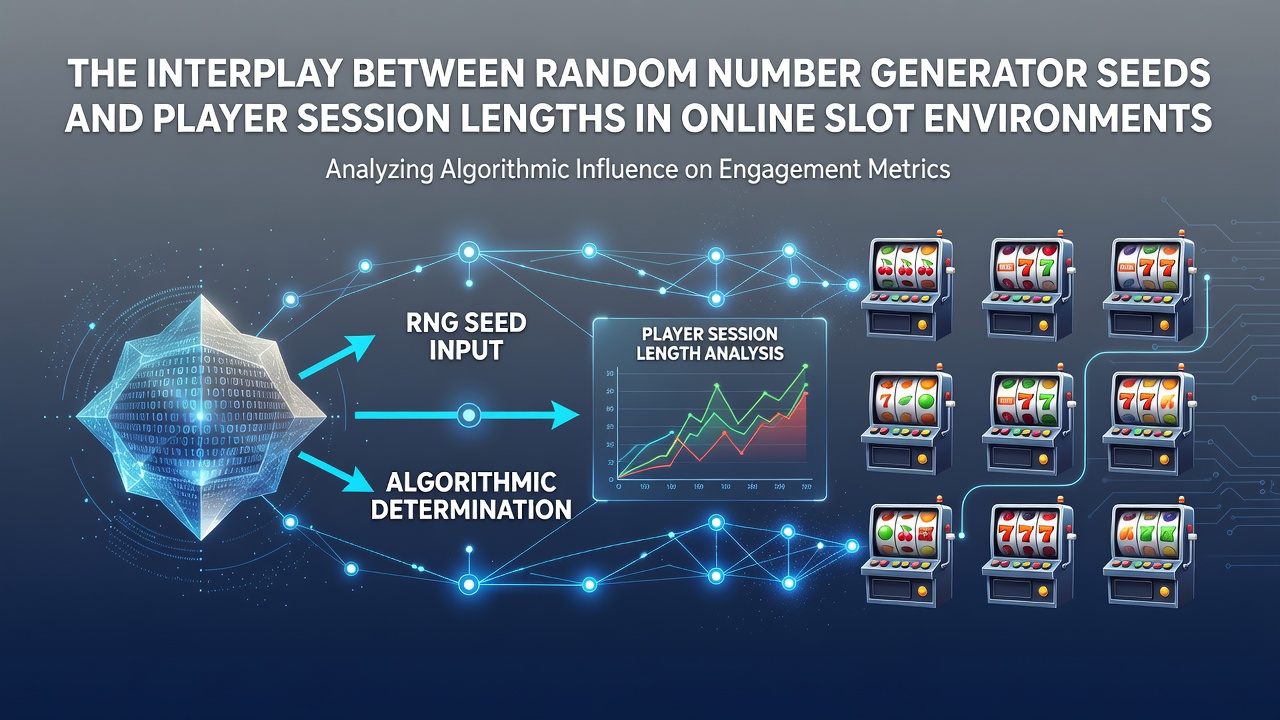
Random number generators form the core of online slot operations, where seeds serve as the starting points that determine entire sequences of outcomes across player sessions. These seeds typically draw from system time stamps, hardware entropy sources, or cryptographic functions to initialize pseudo-random algorithms such as Mersenne Twister or Xorshift variants. Data from gaming laboratories indicate that reseeding occurs at intervals ranging from every spin to every few hundred spins, depending on the platform configuration and jurisdictional requirements.
Mechanics of Seed Initialization and Sequence Generation
Operators configure RNG systems so that each seed launches a deterministic chain of numbers mapped to reel positions, symbol combinations, and bonus triggers. A single seed can govern thousands of potential results before the next initialization resets the cycle. Studies conducted by independent testing agencies show that session length directly correlates with the number of calls made to the RNG function, since every spin advances the internal state. Longer sessions therefore traverse deeper into the generated sequence, while shorter ones remain closer to the initial seed value.
Regulatory frameworks in regions such as New Jersey require documented procedures for seed management, including audit trails that record initialization timestamps and algorithm parameters. New Jersey Division of Gaming Enforcement reports detail how these records help verify that outcomes remain statistically consistent with declared return-to-player percentages across varying session durations. In practice, platforms often employ multiple RNG instances running in parallel, each with independent seeds, which distributes load and reduces predictability risks during peak traffic periods.
Observed Patterns in Player Session Lengths
Industry datasets collected across North American and European markets reveal average session lengths between eight and twenty-two minutes for slot products, with notable variation by game volatility and bonus frequency. Higher volatility titles tend to produce shorter average sessions because players experience longer stretches without significant returns, whereas lower volatility games sustain engagement through more frequent small payouts. Research from the University of Nevada Gaming Research Center has examined how RNG behavior intersects with these patterns, noting that extended sessions sample larger portions of the random sequence and therefore align more closely with theoretical distribution curves over time.
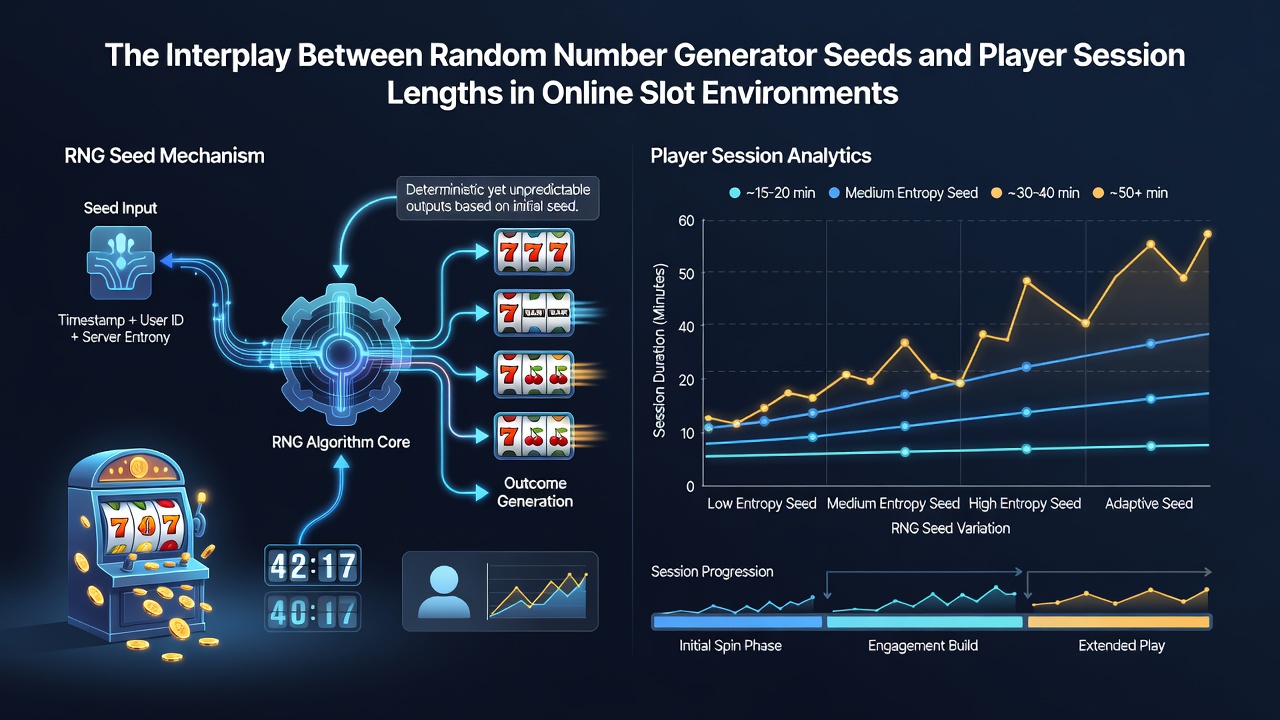
Platform operators track session metrics through player accounts, logging spin counts, bet sizes, and duration without accessing personal identifiers in aggregated reports. Figures released in August 2026 from Canadian provincial regulators highlight that sessions exceeding thirty minutes represent approximately 18 percent of total play volume on remote slot channels, a proportion that has remained stable despite adjustments to stake parameters in several jurisdictions. These longer sessions expose players to more RNG state transitions, particularly when platforms implement periodic reseeding triggered by time elapsed or spin count thresholds.
Technical Factors Linking Seeds to Session Behavior
Seed entropy quality influences the statistical independence of early versus late sequence segments. When seeds incorporate sufficient randomness from hardware sources, the resulting distribution shows no measurable bias regardless of how many spins occur within one session. Observers note that weaker entropy collection can introduce subtle correlations detectable only after millions of trials, yet certified systems undergo rigorous testing to eliminate such issues before deployment. One case examined by European testing houses found that reseeding every 500 spins maintained uniformity across sessions of different lengths, while less frequent reseeding required larger sample sizes to confirm compliance.
Game developers adjust hit frequency and bonus triggers within the RNG mapping tables, which indirectly shapes how players perceive session length. A title engineered for rapid bonus activation may encourage extended play because the sequence produces rewarding events at intervals that align with typical attention spans. Data compiled by the Australian Communications and Media Authority demonstrates that titles with bonus features occurring once every 80 to 120 spins sustain median session times roughly 35 percent longer than those with rarer triggers, although overall return-to-player percentages remain constant.
Regulatory and Operational Considerations
Jurisdictions outside the United Kingdom enforce specific rules on RNG documentation and periodic audits. The Nevada Gaming Control Board mandates that operators submit seed generation protocols and maintain logs accessible during inspections, ensuring that session length variations do not compromise fairness. Similar requirements appear in guidelines from the Malta Gaming Authority, which evaluates both the technical RNG implementation and the player experience metrics reported by licensees. These frameworks treat session duration as an operational variable rather than a direct RNG parameter, yet acknowledge that extended play increases exposure to the full statistical profile of any given game.
Software updates in 2026 introduced more granular logging of seed transitions, allowing operators to correlate specific initialization events with session outcomes across large player cohorts. Such enhancements support compliance reporting without altering the underlying randomness properties.
Conclusion
The relationship between RNG seeds and player session lengths rests on the technical reality that each spin advances a deterministic sequence from its starting seed, while session duration determines how far that sequence progresses before the player stops. Regulatory bodies across multiple regions require verifiable seed management practices that preserve statistical integrity irrespective of play duration. Available data confirm measurable differences in average session times across game types, yet these patterns emerge from volatility settings and feature design rather than any alteration of the random process itself. Continued advancements in logging and audit capabilities support ongoing verification that outcomes remain consistent with certified parameters across all session lengths.